



The 2026 Tour de France Changes the Rules of the Game: The End of Absolute Dominance?
The 2026 Tour de France Changes the Game: Is the Era of Absolute Dominance Coming to an End?
After several seasons defined by the rise of increasingly complete riders, the 2026 Tour de France arrives with a series of rule changes designed to open up the race, restore the importance of specialists, and ensure that every classification has its own battle.
Why Change a Tour That Was Already Successful?
Modern cycling has produced a new generation of riders capable of excelling across nearly every discipline. They climb, attack, time trial, sprint, and compete for multiple jerseys throughout the same race.
In response, Tour organizers have introduced adjustments aimed at creating a more balanced competition between climbers, sprinters, teams, and general classification contenders—without changing the essence of the Tour itself.
The goal is not to limit any particular rider, but to make the race more tactical, more competitive, and more exciting from the first stage to the last.
1. A New Team Time Trial Format
The first major innovation appeared on the opening stage.
Traditionally, in a team time trial, the team's official time was taken from one rider—typically the fourth to cross the finish line. In 2026, that changed. Teams still race together, but each rider now receives their own individual time for the general classification.
This means team leaders can no longer simply rely on the strength of their teammates. Every GC contender must perform all the way to the finish, making team strategy considerably more complex.
Teamwork remains essential, but individual performance once again plays a decisive role.
2. The Green Jersey Returns to the Sprinters
One of the most discussed changes concerns the points classification.
In recent years, exceptionally versatile riders began challenging for the green jersey—traditionally the domain of pure sprinters. For 2026, the Tour revised its points system to restore the advantage to sprint specialists.
Flat stages now award more points to the winner, intermediate sprints carry greater value, and mountain stages retain a much less favorable points distribution for riders aiming to score consistently across every terrain.
Although many fans have jokingly referred to it as the "anti-Pogačar rule," Tour organizers have never described it that way. A more accurate interpretation is that the Tour aims to restore the balance between specialists and prevent a single rider profile from dominating every classification.
3. More Tactics. More Spectacle.
These changes force teams to make strategic decisions from the very first stage.
- Should they protect their general classification leader?
- Chase points with a sprinter?
- Save energy for the mountains?
- Take risks on transitional stages?
The 2026 Tour appears designed to reward different types of talent: the best climber, the best sprinter, the strongest team, and the most complete all-round rider.
Are the Changes Already Making a Difference?
After just three stages, the effects are already becoming visible.
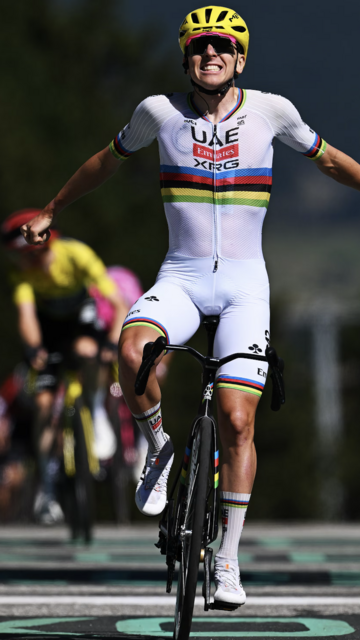
The team time trial created meaningful gaps without deciding the general classification too early. The battle for the green jersey appears far more open for pure sprinters. And while Tadej Pogačar remains one of the leading favorites for the yellow jersey, the path toward dominating multiple classifications looks considerably more challenging than it has in recent years.
The 2026 Tour de France has not only changed its route—it has changed the way the race is contested. And that could make this one of the most tactical, open, and exciting editions in recent memory.





.png)